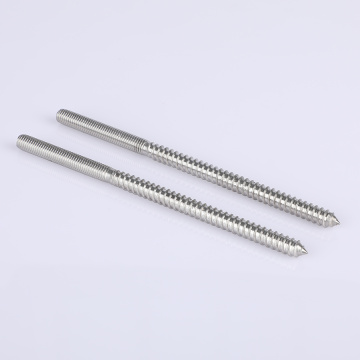

These industrial
double ended bolts combine excellent metallurgical properties with precise thread machining to ensure a secure hold without loosening due to vibration or thermal expansion. Unlike standard carbon steel alternatives, our corrosion-resistant studs maintain their tensile strength even when exposed to moisture, acids, or saline environments, making them a top choice for the marine, offshore, and food processing industries.
Key features include a seamless design with uniform thread depth, a heat-treated alloy composition (typically 304 or 316 grades), and a polished or satin finish for both aesthetic appeal and enhanced surface protection. These
stainless steel stud bolt are available in a variety of lengths and diameters to meet diverse engineering needs, from low-pressure flange connections to high-stress applications in petrochemical refineries. Their non-magnetic properties also make them suitable for sensitive electrical environments where electromagnetic interference must be minimized.
Detailed description of how these
stainless steel stud bolts for pressure vessels are manufactured using advanced CNC machining techniques to achieve tight tolerances and eliminate stress concentrations. Each component undergoes rigorous quality control inspections, including torque testing, salt spray testing, and hardness verification, to ensure compliance with ASME B18.2.1 and ISO 898-1 specifications. This attention to detail helps reduce maintenance issues, minimize downtime, and achieve long-term cost savings across industrial operations.
Common applications include securing boiler flanges, installing heavy machinery components, reinforcing pipe joints, and assembling modular building units in infrastructure projects. They are particularly effective in industries such as oil and gas, power generation, pharmaceuticals, and wastewater treatment facilities, where material integrity directly impacts safety and operational efficiency. The versatility of these studs allows engineers to customize solutions based on load-bearing requirements, environmental exposure, and installation constraints.