In the realm of industrial fastening and mechanical assembly, the integrity of a connection is only as strong as its weakest component. Among the myriad of hardware solutions available, the Precision Stainless
double thread bolt stands out as a critical element for applications demanding superior tensile strength, corrosion resistance, and dimensional accuracy. This comprehensive guide explores the nuances of these high-performance fasteners, detailing why they are the preferred choice for global industries ranging from aerospace to marine engineering. Whether you are sourcing Precision Stainless Double Thread Bolts Price options for bulk procurement or seeking specific models for sale, understanding the technical specifications and material science behind these bolts is essential for ensuring long-term structural reliability.
Overview of High-Performance Fastening Solutions
The market for industrial hardware is saturated with generic alternatives, yet few can match the precision engineering inherent in stainless steel double-threaded fasteners. These components are not merely screws; they are meticulously crafted instruments designed to withstand extreme environmental conditions and mechanical stress. The term "double thread" refers to a specialized helical ridge configuration that offers distinct advantages over single-thread counterparts, primarily in terms of lead rate and mechanical efficiency. When constructed from premium-grade stainless steel alloys, such as 304, 316, or duplex grades, these bolts provide an unparalleled balance of durability and adaptability. For engineers and procurement specialists evaluating Precision Stainless Double Thread Bolts product specifications, the focus must remain on the interplay between material composition, thread geometry, and surface treatment. This synergy ensures that the fastener performs optimally under load, resisting shear forces and preventing loosening due to vibration—a common failure point in standard hardware.
Key Technical Characteristics and Specifications
To fully appreciate the value proposition of these fasteners, one must delve into their defining characteristics. The primary differentiator is the double-start thread design. Unlike traditional single-thread bolts, which advance linearly with each rotation,
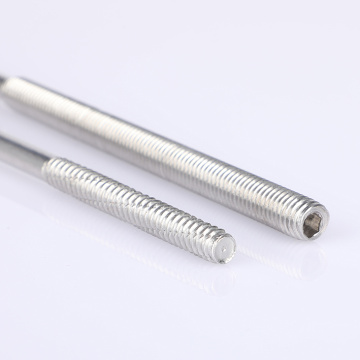
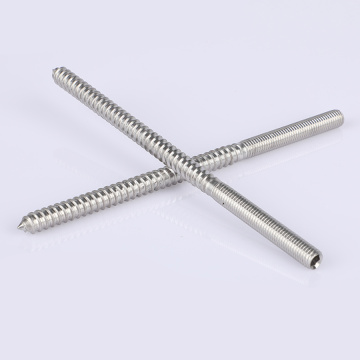
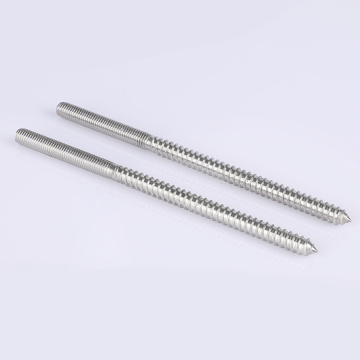
Double-thread Bolts feature two parallel helical ridges. This configuration effectively doubles the lead, allowing for faster assembly and disassembly while maintaining robust clamping force. This feature is particularly advantageous in applications where time efficiency during maintenance cycles is crucial without compromising security. Furthermore, the use of stainless steel provides inherent resistance to oxidation and chemical degradation. Grade 316 stainless steel, enriched with molybdenum, offers exceptional protection against chloride-induced pitting, making it ideal for marine and coastal environments. Meanwhile, Grade 304 remains a versatile workhorse for general industrial use, offering good formability and weldability.
Dimensional precision is another hallmark of top-tier products. Tolerances are strictly adhered to, ensuring that every bolt fits seamlessly into pre-drilled holes or tapped threads without binding or excessive play. This level of accuracy reduces the risk of cross-threading during installation, which can damage both the fastener and the host material. Additionally, the surface finish plays a significant role in performance. Smooth, deburred edges prevent stress concentration points that could lead to premature fatigue failure. The head style, whether hexagonal, socket, or pan head, is engineered to distribute torque evenly, minimizing the risk of head stripping during tightening. These attributes collectively define the quality of any Precision Stainless Double Thread Bolts for sale, distinguishing premium inventory from substandard imports.
In-Depth Analysis of Material Science and Manufacturing
The manufacturing process of precision stainless steel double-thread bolts involves rigorous steps that begin with raw material selection. High-quality billets are drawn into wire or rods, ensuring uniform grain structure and mechanical properties. Cold heading or machining forms the basic shape of the bolt, followed by thread rolling. Thread rolling is a cold-working process that displaces metal rather than cutting it away, resulting in stronger threads with a continuous grain flow. This method enhances the yield strength of the fastener significantly compared to cut threads. For double-thread variants, specialized dies are employed to create the dual helical path with exact pitch and depth control.
Heat treatment may be applied depending on the required hardness and toughness levels. Solution annealing is commonly used for austenitic stainless steels to dissolve carbides and restore corrosion resistance after cold working. Passivation treatments are often performed to remove free iron particles from the surface and enhance the passive oxide layer, further boosting corrosion resistance. Quality control measures include microscopic inspection for thread defects, salt spray testing for corrosion endurance, and tensile testing to verify load-bearing capacity. These stringent protocols ensure that every unit meets international standards such as ISO, DIN, or ASTM, providing buyers with confidence in the Performance Stainless Double Thread Bolts Price and overall value.
Versatile Application Scenarios Across Industries
The utility of precision stainless double-thread bolts extends across a broad spectrum of sectors, each with unique demands. In the marine industry, where exposure to saltwater is constant, these bolts are indispensable for securing deck fittings, railings, and hull components. The double-thread design allows for quicker adjustments during repairs, while the stainless steel construction prevents rust-related failures. Similarly, in the automotive and motorsports sectors, lightweight yet strong fasteners are required to maintain vehicle integrity at high speeds. The reduced weight of stainless steel compared to some alloy steels, combined with high strength, makes these bolts suitable for engine mounts and chassis connections.
Aerospace engineering represents another critical application area. Here, reliability is non-negotiable. Components must withstand extreme temperature fluctuations and pressure changes. Precision Stainless Double Thread Bolts are utilized in avionics housings and interior structures where vibration damping and secure locking are vital. The medical device industry also benefits from these fasteners, particularly in surgical instruments and imaging equipment. The biocompatibility of certain stainless steel grades, along with the ease of sterilization, ensures hygiene and safety standards are met. Furthermore, in food processing and pharmaceutical manufacturing, the smooth, non-porous surface of stainless steel prevents bacterial buildup, making these bolts compliant with strict sanitary regulations. Even in architectural applications, such as curtain walls and façade installations, the aesthetic appeal and longevity of stainless steel make it a preferred choice for visible structural elements.
User Feedback and Industry Recognition
Feedback from professionals who have integrated these fasteners into their operations highlights several recurring themes of satisfaction. Engineers frequently commend the consistency in thread pitch and diameter, noting that installation times are reduced by up to twenty percent compared to standard single-thread equivalents. Maintenance technicians appreciate the ease of removal during routine inspections, attributing this to the efficient lead of the double-thread design. Corrosion resistance has been a standout feature in user reviews, with many reporting zero signs of degradation after years of exposure to harsh outdoor environments. Procurement managers often cite the competitive Pricing Stainless Double Thread Bolts as a key factor in their decision-making process, balancing cost-effectiveness with long-term durability. The lack of frequent replacements due to failure translates to lower total cost of ownership, a metric highly valued in large-scale industrial projects.
Frequently Asked Questions Regarding Precision Hardware
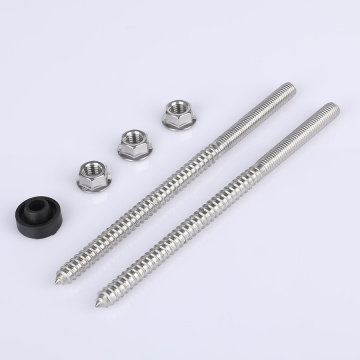
Prospective buyers often inquire about the compatibility of double-thread bolts with standard nuts and threaded holes. It is important to note that double-thread bolts require matching double-thread nuts or inserts to function correctly. Using a single-thread nut will result in improper engagement and potential failure. Therefore, verifying the thread specification before purchase is crucial. Another common question pertains to the difference between 304 and 316 stainless steel. While both offer excellent corrosion resistance, 316 contains molybdenum, providing superior resistance to chlorides and acids, making it more suitable for marine or chemical environments. Regarding installation torque, users should consult manufacturer charts, as the double-thread design may alter friction coefficients compared to single-thread versions. Proper lubrication during installation can help achieve accurate preload and prevent galling, a common issue with stainless steel fasteners. Finally, regarding availability, many suppliers offer custom lengths and head styles to meet specific project requirements, ensuring that Precision Stainless Double Thread Bolts for sale can be tailored to exact engineering needs.
In conclusion, investing in high-quality Precision Stainless Double Thread Bolts is a strategic decision that pays dividends in operational efficiency, safety, and longevity. By understanding the technical intricacies, material benefits, and diverse applications outlined above, stakeholders can make informed choices that align with their project goals. The combination of advanced thread geometry and superior material science positions these fasteners as an essential component in modern engineering solutions. As industries continue to demand higher performance standards, the role of precision-engineered hardware becomes increasingly pivotal. Selecting the right supplier and product specification ensures that your infrastructure remains secure, reliable, and resilient against the challenges of time and environment. Whether you are managing a small-scale repair job or overseeing a massive industrial installation, the principles of precision, durability, and suitability must guide your selection process. Embrace the technological advantages offered by double-thread designs and stainless steel compositions to elevate the standard of your fastening solutions. The market for these products is robust, with numerous options available for sale, but discerning buyers will always prioritize verified quality and technical compliance over mere price considerations. Ultimately, the true value lies in the peace of mind that comes from knowing your connections are built to last.


 Contact Now